


Things to Do in Avilés
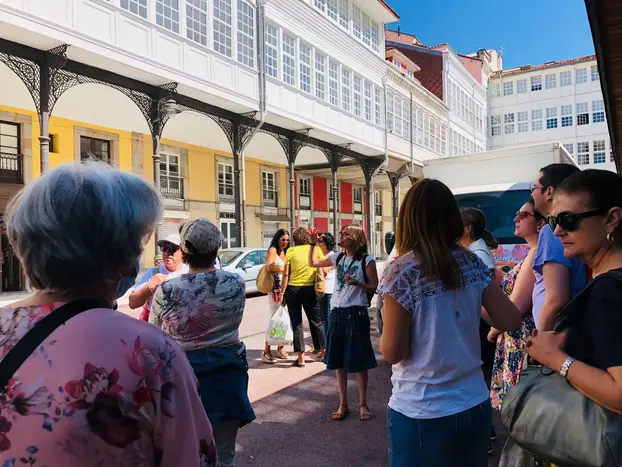
Avilés preserves a Historic Center that surprises those who visit it. Its millennial origins date back to the Middle Ages, when it received the charter that elevated the population to the category of a town, it was walled, and it experienced its moment of maximum splendor.
In this free tour, we will explore the center of Avilés, with its typical arcades, along with the Sabugo neighborhood, the only suburb that existed outside the walls in the Middle Ages in the town.
We will get to know not only medieval Avilés but also its Baroque and Modernist periods of splendor.
The guided tour will begin at the fountain of San Francisco's spouts, to delve into the streets that were walled centuries ago. We will see the importance that its port had for Avilés and we will be able to contemplate emblematic buildings such as the Palace of Valdecarzana, the Church of the Franciscan Fathers, and the Palace of Camposagrado.
We will continue to Sabugo, the old fishermen's neighborhood. Sabugo was separated for centuries from walled Avilés by a large marsh, where the Muelle park is located today. There we will delve into the history of the only suburb that existed outside the walled area in the Middle Ages, its streets, and its two churches.
The tour will end near the Town Hall Square, on Galiana Street, where we will talk about the Baroque expansion and some of the constructions that marked Avilés in the 17th century: the Town Hall, the Ferrera Palace, and the Julián Orbón music conservatory.
Note: this tour requires a minimum of 4 people to proceed.
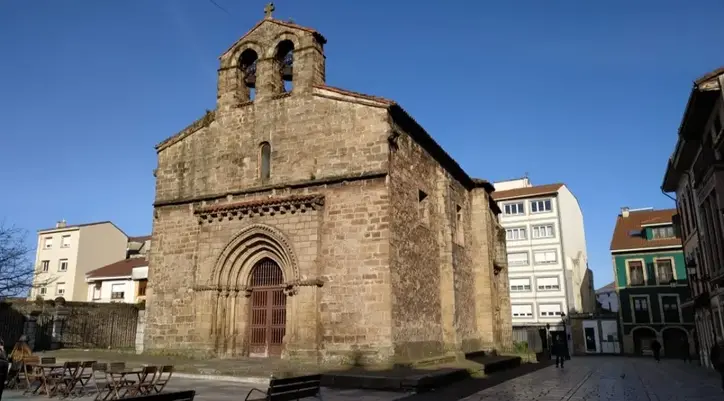
With this free tour through the historic center of the city of Avilés you will discover all the monuments that this land of discoverers, marine and medieval, hides. The Free Tour will begin with the sculpture of Pedro Menéndez de Avilés, a military man who played a fundamental role in North America in the 17th century. From here, we begin to learn more about the history and curiosities of this city and we will see monuments such as the Niemeyer Center or the Sabugo Church located in the old fishing district. Near this neighborhood we will visit the popularly known as the Cathedral of Avilés: the church of Santo Tomás. We continue with the Avilés estuary where we will tell you the importance that this area had during the Second Industrial Revolution as well as being able to enjoy its incredible views. We will continue to Plaza de España where we can contemplate the Town Hall and the Ferrera Palace, one of the oldest Baroque buildings in Asturias. To finish we will visit the Balsera Palace, the parish of San Nicolás de Bari, the Camposagrado palace or the church of the Franciscan Fathers. The tour will end at the meeting point in the Parque del Muelle.


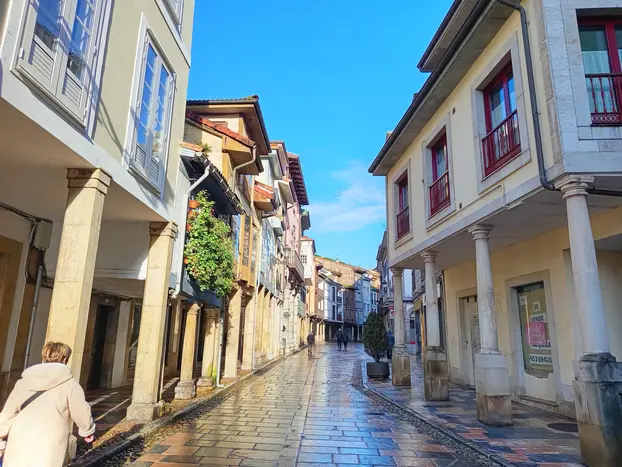
In the 17th century, a profound urban transformation took place in the medieval walled town of Avilés. A new town hall was built outside the walls, in what was called the Plaza de Fuera de la Villa (Town Square). This, coupled with a population boom, led to a shift in the center of power, and the nobility and wealthy residents ventured to build their homes outside the walled area as well. New streets, lined with stately buildings, were created, forming what became known as the Baroque expansion of Avilés.
The arcaded Galiana street will reveal some secrets to us, starting with the origin of its name. We will cross Ferrera Park, the former private gardens of the Marquises of Ferrera, and continue along Rivero, the longest and busiest pedestrian street in the town.
We will delve into one of the town's most splendid moments, when the nobility displayed its greatest power, and connect with the more recent past, in which the burgeoning bourgeoisie and the "Indianos" (Spaniards who had made their fortunes in the Americas) began to occupy an increasingly important place in Avilés.
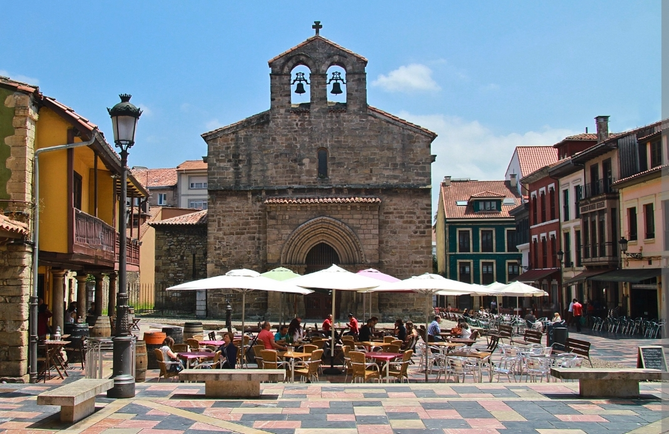
Aviles. millennial city. A city where original streets and houses are still preserved where painters, Great Discoverers of the New World or poets of the Great Court of Madrid del Habsburg walked.
I will tell you the popular names and their meanings, including curious anecdotes and stories such as the la'Chichilana cafe or the Bombé promenades. and the curious story of an "influencer" seal in the villa
We will discover palaces with ghosts or churches that "exchanged the saints" or that are "upside down ". A street that turns into a river once a year... a thousand anecdotes and stories that make it the city with the most columns in Spain (almost 4 km of arcades).
We will go from medieval streets and some buildings of that time to large modernist palaces built as residences for the industrialists who arrived from "the Americas" in the 19th century, passing through Baroque palaces and even the jewel of 21st century architecture.
During the 2 and a half hours that we will be together you will discover that Avilés is full of charming corners.
Taking the music kiosk in the Parque del Muelle as a starting point, we propose a quiet walk through the historic center of the Sabugo neighborhood, the origin of the city, and through the emblematic streets of Galiana or Rivero with their houses with the arcades that have made so singular or to contemplate the nineteenth-century Avilés and the beginning of the 20th century with its modernist architecture.
In short, everything that has given it its current character.
Think no more,
WE ARE WAITING!