

Things to Do in Wrocław


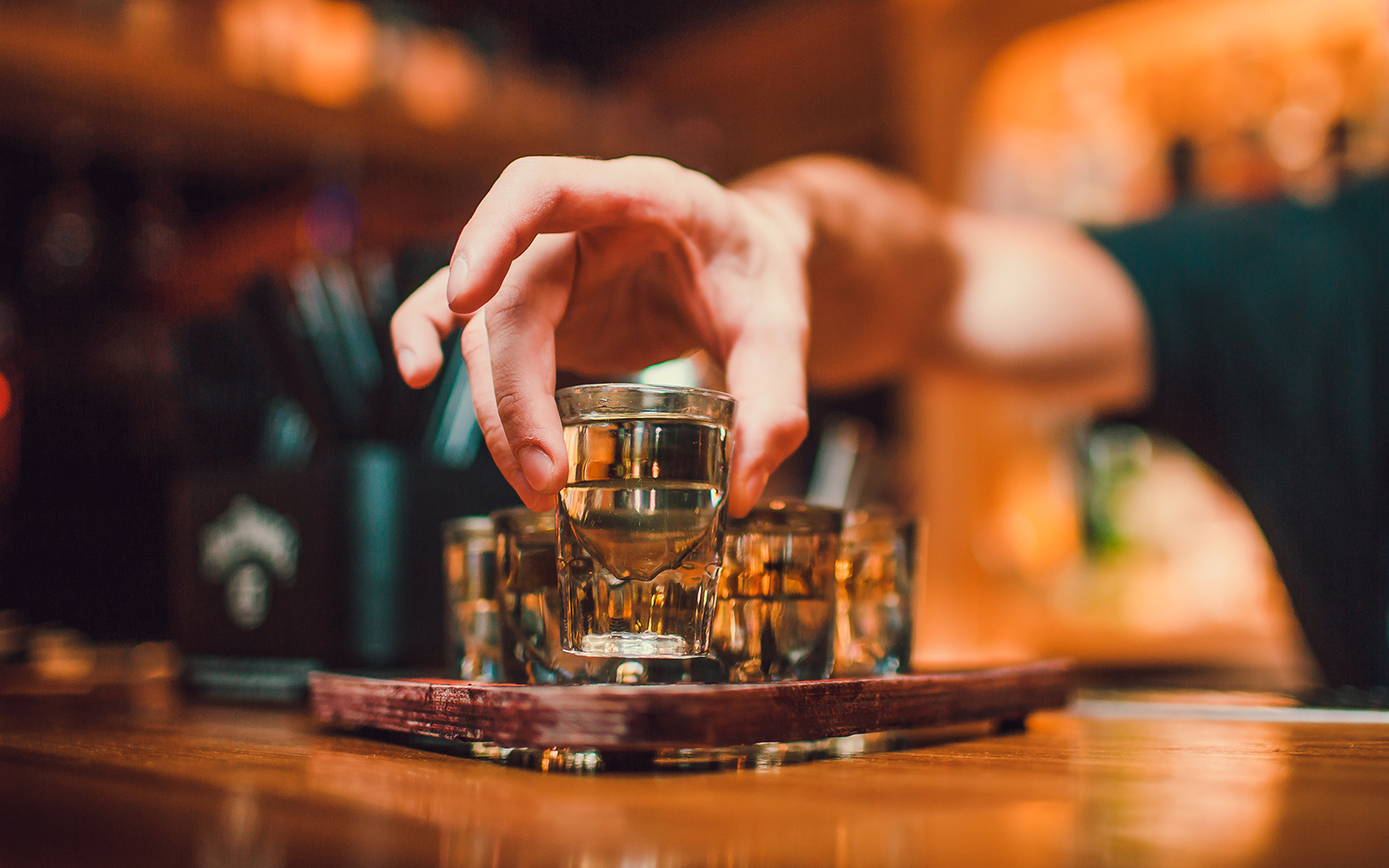
• While you sip and feast, a vodka guide will keep you engaged with interesting stories about the communist era and insights into the drinking culture of Poland.
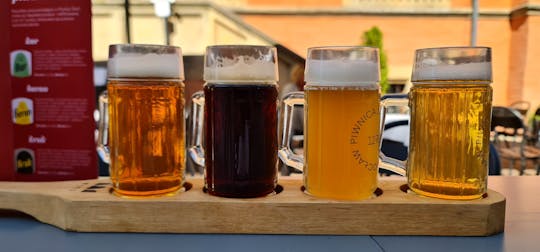
• Go bar hopping at 3 popular hangs and prove your drinking prowess by downing 8 shots of different, flavorful Polish vodkas!
• Choose your favorite out of various world-famous fresh and creamy Żubrówka, and the lightly sweetened Soplica, and pair them with the perfect appetizers.
• Fun fact: In Polish weddings, the bride and groom choose between 2 glasses containing water and vodka. Whoever chooses vodka will play a dominant role in the marriage.
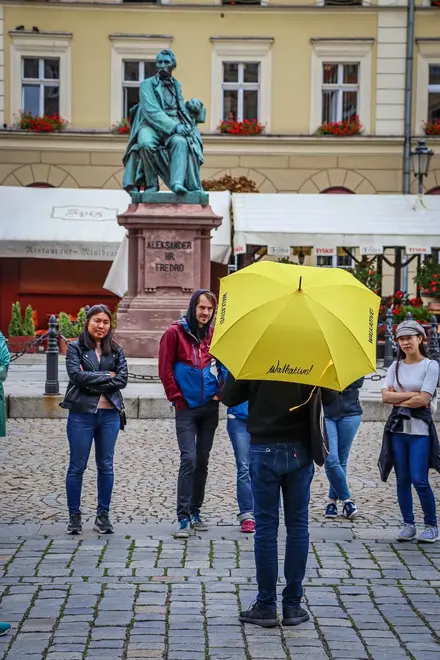
History of Wroclaw is long and complex. To understand it, you need to dive into the past of over 1000 years. The city is called Microcosm by professor Norman Davies due to being a part of different countries and its location in the middle of Europe. Davies said that everything, what happened in Europe, at some point happened in Wrocław as well: wars and religious struggle, wealth of trade city, Nazis and WWII with almost total annihilation of the city, becoming a part of communist block to final jump into freedom over 25 years ago. Modern Wrocław is one of fastest developing cities in Europe with rich culture and open, welcoming people. If you want to find out how all of this happened, simply join our tour!
ℹ️ ⚠️ ATTENTION - booking rules
Please note that our free tours are designed for individual travelers and small private groups only. Hence, we do not accept parties of 8 or more people on regular free tours and guides have the right to deny participation to such groups. If you travel in a party of 8 or more please book a private tour in advance.
If you show up at the meeting point with the bigger group our guide will ask you for the payment (18 eur/person) before the tour or cancel your reservation on the spot. To confirm your reservation please arrive 10 minutes before starting. We can not guarantee participation when you will be late.
Please note that multiply bookings (under different names) for 7 people who belong to one group will still be treated as one organized group and the guide has the right to deny participation to such parties.
This policy is implied in the best interest of our individual visitors.
Please respect our rules.


• Skip the queue with fast-track entry to Auschwitz-Birkenau, thus maximizing your time exploring this haunting World War II site.
• Walk through the gas chambers and crematorium, and observe the special exhibits that shed light on the cruel realities of the concentration camp life.
• Benefit from the knowledge of an expert guide, in English, French, Italian, or Portuguese, who'll share invaluable historical context and answer your queries.
• Did you know? Soviet troops liberated Auschwitz on January 27, 1945. Today, this date is commemorated as International Holocaust Remembrance Day.
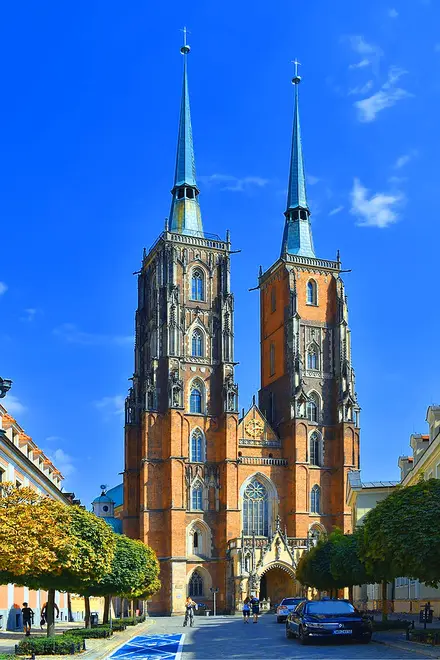
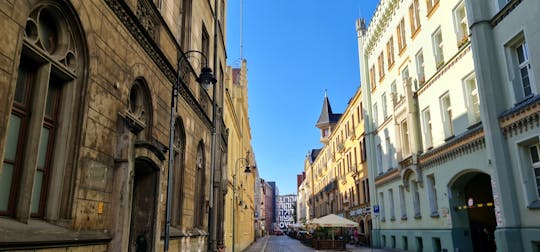
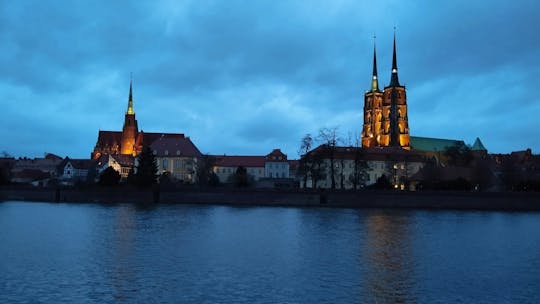
Wrocław is a city deeply shaped by its rich history, legends, and stories passed down through generations. On this guided walking tour, we will explore Ostrów Tumski, the oldest and most beautiful part of the city, as well as the Market Square
As we walk through historic streets, we’ll uncover Wrocław’s fascinating past, from its medieval origins through to the era of communism, seeing how these times have influenced the city’s character and architecture.
Along the way, you’ll hear captivating legends: the tale of a mysterious head hidden within the cathedral walls, the famous Bell of Sinners, the romantic story behind the Bridge of Lovers, and the amusing legend of a dumpling that escaped its pot and climbed to the top of a gate. While legends take center stage, history will also be woven throughout the tour, offering a deeper understanding of the city’s heritage.
This tour is perfect for visitors who want to experience Wrocław through a blend of intriguing stories and historical insights, bringing the city’s past vividly to life.
At the end of the tour, I will share a QR code with you that links to a curated collection of food and leisure recommendations via Linktree, so you can continue enjoying Wrocław beyond the walk.


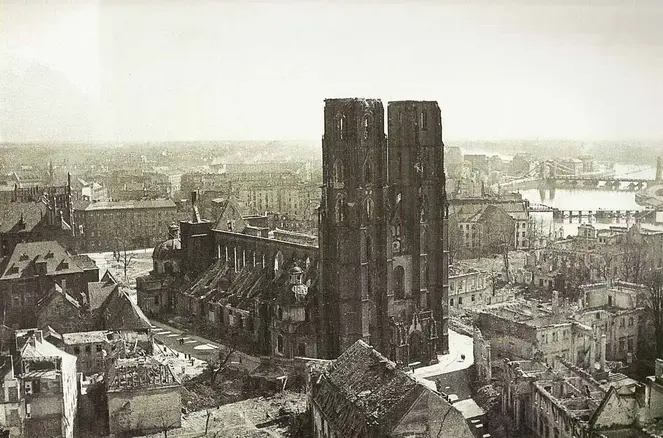
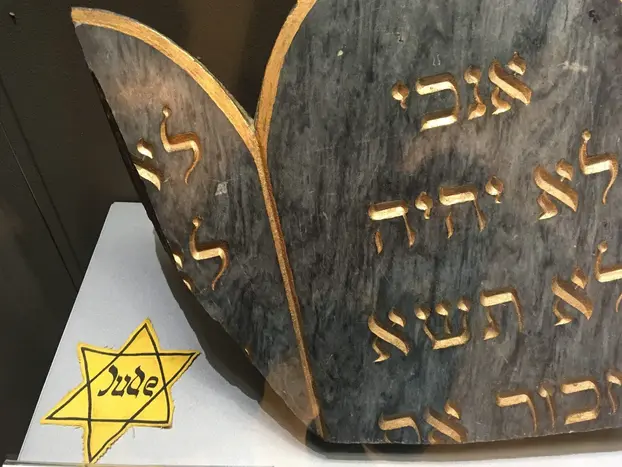
Wrocław is situated right at the heart of Europe. Throughout centuries, it stood as a prominent hub of Jewish life within Central Europe. Collaborating with Protestants, Catholics, and Orthodox Christians, the Jewish community contributed to the prosperity of one of the most affluent cities in the German Empire. Despite being expelled during the Middle Ages, they later returned, and during the 19th century, Wrocław emerged as a central bastion of Haskalah, the Jewish Enlightenment movement that left an indelible mark on Judaism. The legacy of Wrocław's generations of rabbis is indispensable for understanding the evolution of modern Judaism.
This vibrant and diverse world encountered an abrupt halt during the 1930s with the rise of the Nazi regime. Subjected to humiliation and persecution, the Jewish population of Wrocław found themselves sharing the tragic fate of other European Jews, falling victim to the Holocaust orchestrated by the Germans and their collaborators. However, the tides of war eventually shifted, and in 1945, the Third Reich crumbled before the relentless advance of the Red Army. Adolf Hitler mandated Wrocław to be transformed into a "Festung" – a fortress intended to safeguard the vision of a thousand-year Reich, even if it meant the last ounce of blood and the final bullet. Consequently, the city turned into the backdrop for one of the most intense urban battles of World War II, ultimately succumbing to the Allies even after the fall of Berlin itself.
We invite you to delve into the historical and contemporary Jewish narrative of Wrocław, as well as the city's devastating experiences during the conclusion of World War II. Embark on a journey through the captivating heart of the city – the district of four denominations. Uncover a space where the profound and captivating history of Wrocław unfolds, alongside witnessing the resurgence of culture and the transformations that have transpired over the past two decades.
ℹ️ ⚠️ ATTENTION - booking rules
Please note that our free tours are designed for individual travelers and small private groups only. Hence, we do not accept parties of 8 or more people on regular free tours and guides have the right to deny participation to such groups. If you travel in a party of 8 or more please book a private tour in advance.
If you show up at the meeting point with the bigger group our guide will ask you for the payment (18 eur/person) before the tour or cancel your reservation on the spot. To confirm your reservation please arrive 10 minutes before starting. We can not guarantee participation when you will be late.
Please note that multiply bookings (under different names) for 7 people who belong to one group will still be treated as one organized group and the guide has the right to deny participation to such parties.
This policy is implied in the best interest of our individual visitors.
Please respect our rules.


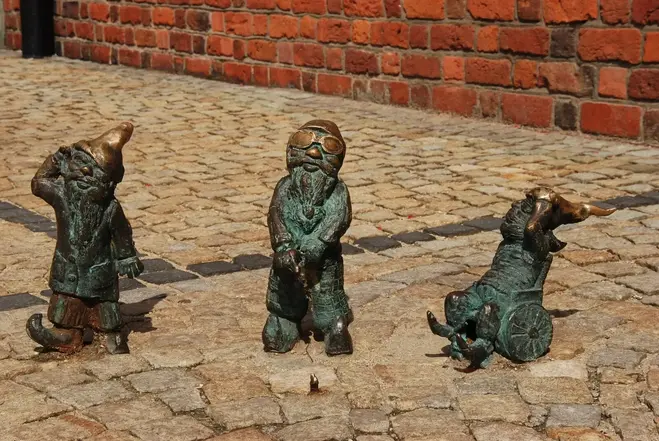
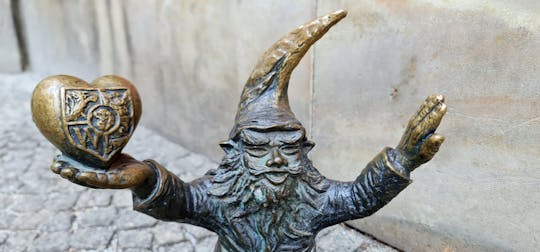
What can you do when a regime you live under oppresses and controls every area of your life? What can you do when censorship does not allow you to express your beliefs and feelings? How do you fight when the power fight against is simply too great to give you any chance of winning? Here in Wrocław … dwarfs became the answer.
Do you know that dwarfs are one of the symbols of the city? Did you know that it all started under communism? These were the days when first dwarfs started to appear in the streets of Wrocław – then drawn on the walls, today as small statues. What did and do they mean? Why dwarfs? Join our Dwarfs and Communism tour to fully understand how Communism shaped us Poles, but also how we managed to fight it back with laughter. Absurd and surreal thinking became powerful weapons in the struggle through the tough post-war days.
During Dwarfs and Communism tour, you will have a chance to learn about Wrocław between 1980 and 1990. Discover the story of the struggle against Communism, hope, and fun despite all odds. Be ready for an exceptional dwarf hunt. You simply can not miss it!


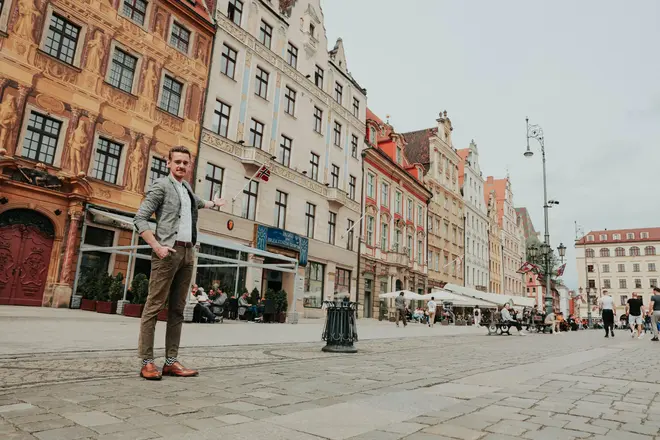
Do you know that Wrocław through its over 1000 years of history was ruled by Poland, Czechia, Austria, Prussia, Germany, Poland + with small French and Hungarian episodes?? This incredible mix has created a city like no other with monuments, places and histories, which will stay in your memory for a long time. I will get you acquainted with Wrocław like no one else.
We will see the "must-see" and places only known to locals. You will hear the stories that will sound like they are made up but are not. We will "meet" medieval saint celebrity, Egyptian mummy, cheeky and cunning noble, fearsome king and unusual artist. You will see buildings and monuments from small one like your toe to almost 100 meters high. And everywhere we will be spied on by the...dwarfs.
Come, let's dive into Wrocław with me. Are you ready for the adventure?
Main highlights of the tour:
- Salt Square (meeting point)
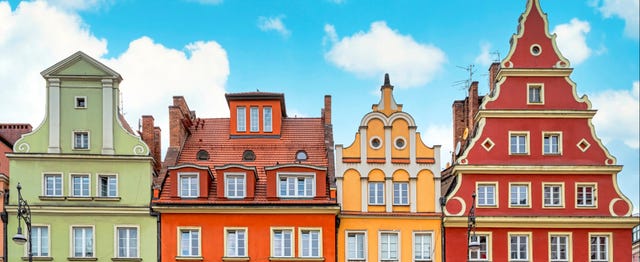
- Old Market Square
- Old City Hall
- Świdnicka Cellar - oldest restaurant in Europe
- Church of St. Mary Magdalene
- Feniks Department Store
- Church of St. Elisabeth
- Butchery Alley
- University of Wrocław baroque buildings
- Church of the Blessed Name of Jesus
- Former monastery of the Crusaders with the Red Cross order
- Market Hall
- Sand Island
- Cathedral Island
- Cathedral of St. John the Baptiser (end of the tour)
And many many more!
Duration of the tour: 4h (including 20-30 min coffee break in a lovely historic area, refreshments are at own expense)
Max no. of participants per tour: 5
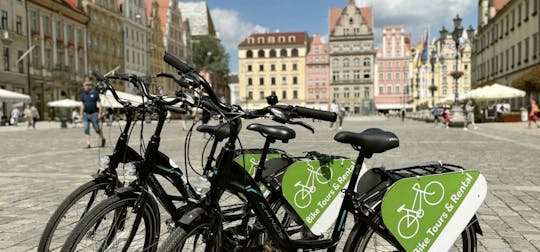
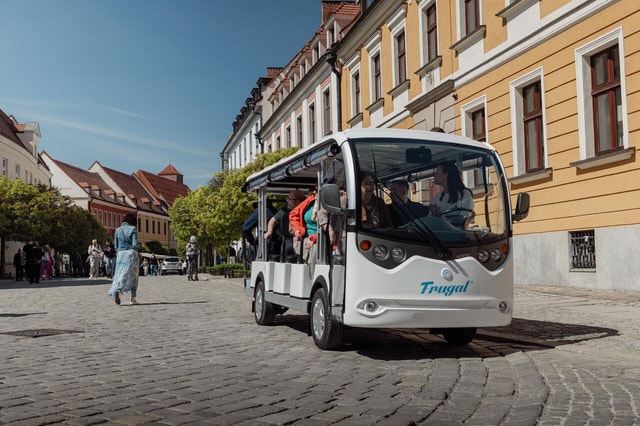


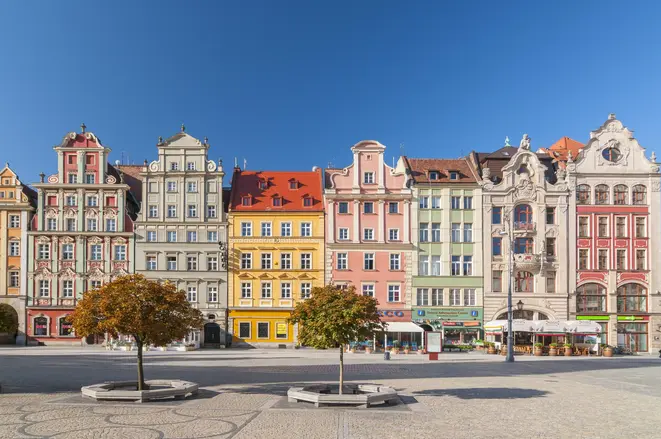
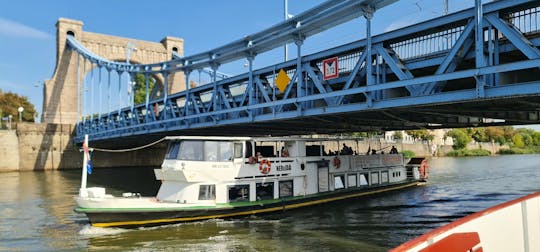
Wroclaw, is the capital of the region called Lower Silesia, one of the oldest and most beautiful cities in Poland. Located at the foot of the Sudetes Mountains in the Oder River Valley is an exceptional city of 12 islands and more than 100 bridges. In a 2-and-a-half-hour walk tour, you will discover the main places and stories of the city, what the tour covers are the following points: Rynek Market Square City Hall The Old Palace of the Kings of Prussia Plaza de the Salt The old street of Butchers University of Wrocław Covered Market Sand Island Ostrów Island Tumski with the Cathedral And of course the history of the elves of Wrocław